




TEXAS—Ahead of the first anniversary of HR 1, known as the “One Big Beautiful Bill Act,” Feeding Texas, the statewide network of food banks, is examining the policy’s impacts on food access in Texas.
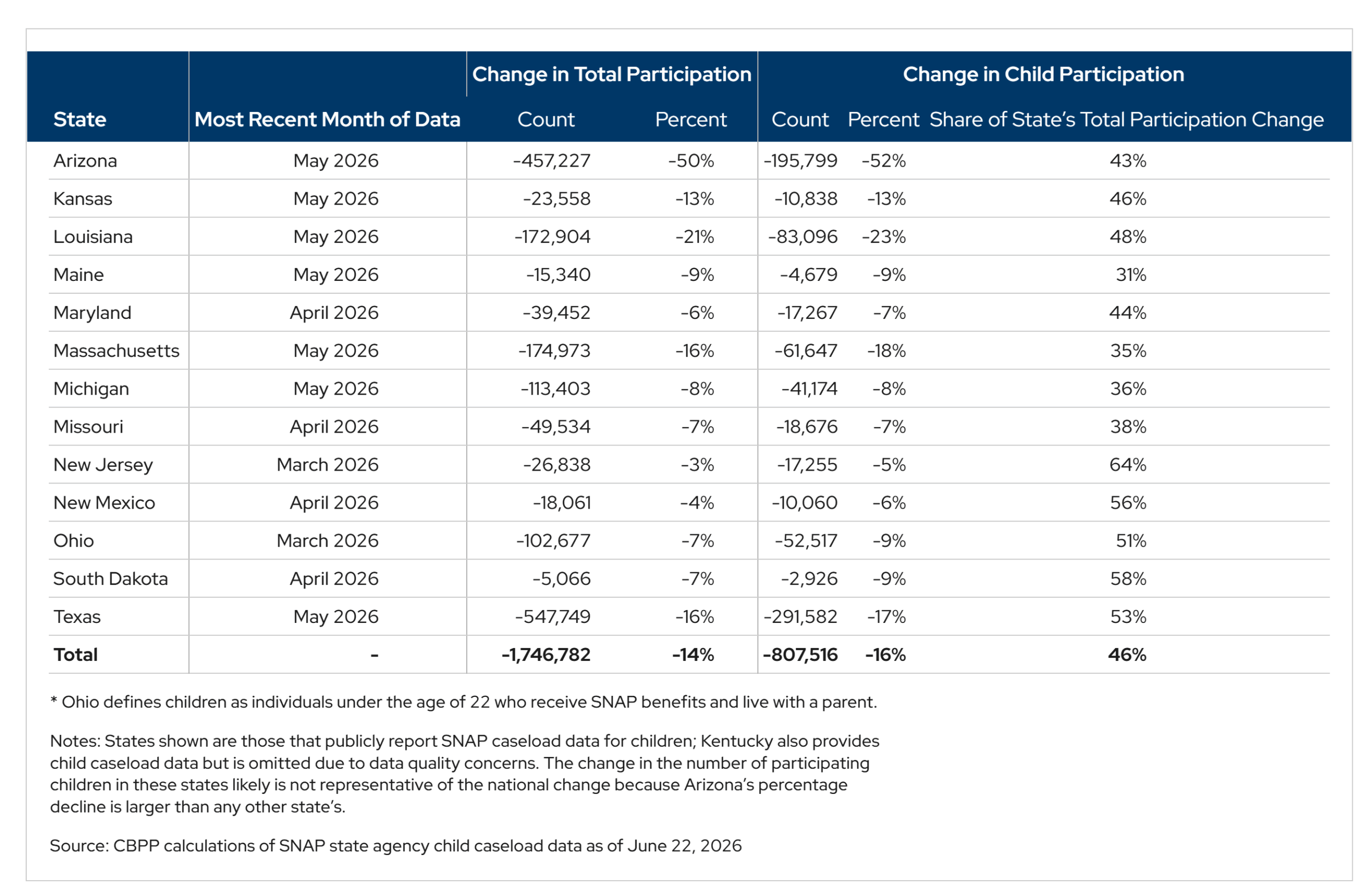
Signed into law on July 4, 2025, HR 1 included significant changes to the Supplemental Nutrition Assistance Program (SNAP), including expanded work requirements. Publicly available data and national analysis tools show that Texas SNAP participation has declined by about 16% since July 2025 – a decline of nearly 550,000 individuals, more than half of them children. At the same time, food banks are seeing record demand due to the rising cost of living.
“Texans are facing higher prices for basic groceries like milk, beef and vegetables,” said Celia Cole, chief executive officer of Feeding Texas. “SNAP is designed to be a temporary bridge that helps families afford food during tough times, but recently we have seen fewer people able to access this critical support. While food banks play an essential role in keeping Texans fed, charitable food assistance cannot match the scale or impact of federal nutrition programs like SNAP.”
The patterns strongly suggest that new eligibility restrictions and expanded work requirements are making it harder for eligible Texans to stay enrolled. These new requirements cut people off of SNAP after three months if they aren’t working 30+ hours per week, but people often struggle to make it through the administrative hurdles to meet these requirements, even if they are working.
Additionally, new provisions in HR 1 shift certain program costs to states and tie significant new financial obligations to SNAP payment error rates—a statistical measure of how accurately SNAP benefits are calculated by Texas Health and Human Services.
SNAP payment error rates are often misunderstood. Payment errors can result from administrative complexities or case processing challenges, and are not an indication of fraud. Many errors are the result of fluctuating income or changes in household composition or shelter costs.
Beginning October 1, 2027, states with payment error rates above 6% must share between 5-15% of SNAP benefit costs. The state’s payment error rate for fiscal year 2025 was published this week and sits at 9.34%, meaning Texas could face up to $709 million per year in benefit costs beginning in fiscal year 2028. If states are unable to take on this new financial burden, it could put their participation in SNAP at risk, threatening SNAP benefits for millions of working families, children, seniors and veterans.
“Program integrity matters, and we support efforts to ensure SNAP operates effectively and responsibly,” Cole said. “Reducing error rates is a shared goal, but it requires time and investment in technology upgrades, staff training and policy simplification to improve the accuracy of benefit calculations. We’re urging Congress to delay the cost-share requirement by two years to give all states a fair opportunity to make these improvements before facing significant financial penalties. The focus should be getting the policy right while protecting access to food for eligible families.”
Some states with the highest payment error rates like Alaska are already receiving additional time to meet the new requirements.
Texas food banks currently distribute more than 700 million pounds of food annually through a network of more than 5,000 community partners, yet for every meal provided by food banks, SNAP provides nine. SNAP remains the nation’s most effective anti-hunger program and plays a vital role in supporting local grocers, retailers and agricultural producers across the state. Millions of households rely on SNAP at some point during the year to help stretch their grocery budgets.
For Heather Sandlin, of Hays County, SNAP provided critical support as she battled stage 4 ovarian cancer.
Heather applied for SNAP as she went through cancer treatment, hoping SNAP would help her access healthier, vegetarian foods that would meet her specific dietary needs.
“I was able to eat better,” Sandlin said. “I ate more organically, which is a lot better for cancer, to eat the healthiest you can.”
But when she went back to work to help cover her high healthcare costs, her SNAP benefits were reduced from around $200 a month to $24 a month.
“With the cost of food and everything else, I can’t eat healthy,” Sandlin said. “Because you have to eat cheap when you don’t have the money.”
Stories like these demonstrate why federal nutrition programs and food banks must work together to support Texans facing difficult circumstances.
“Giving states adequate time to improve payment accuracy is a practical solution that protects both SNAP program integrity and food access,” Cole said. “Texas families should not pay the price for rushed policy changes.”
For more information about Feeding Texas and its statewide network of food banks, visit feedingtexas.org.