




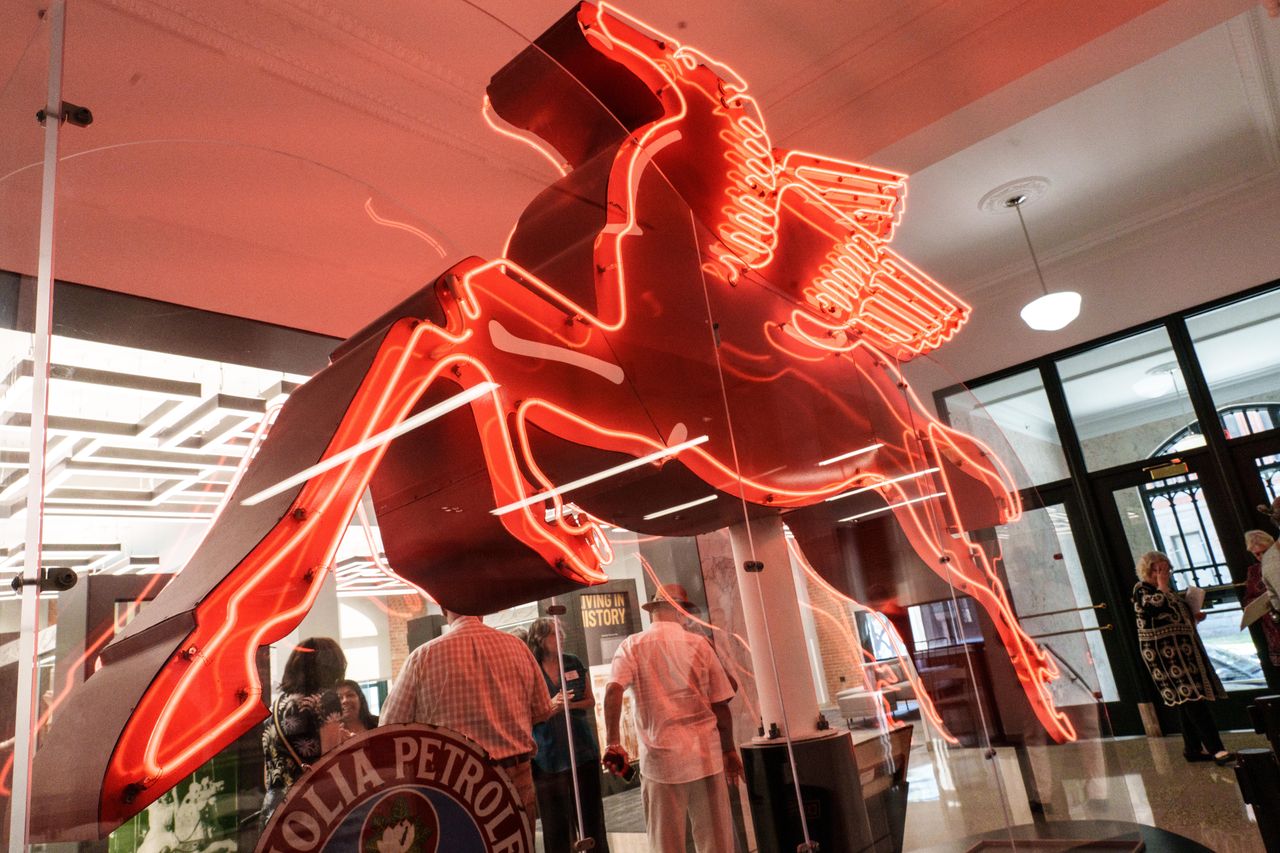
Legacy Dallas – A Presentation of Dallas County’s Culture and History was officially unveiled at the Dallas County Records Building Aug. 6, featuring a permanent exhibit and dynamic online educational experience.
The in-person exhibit, which showcases Dallas County by preserving its past, sharing its stories and bringing its legacy to life, is now on view at its new home on the main entrance level of the Dallas County Records Building (500 Elm Street in downtown Dallas). A comprehensive digital platform at LegacyDallas.org complements the in-person experience with curated content for history enthusiasts, educators, students and visitors. Presented by Dallas County, both the exhibit and online resource are free to the public.
Flanked by the iconic neon-red Pegasus, the exhibit features nearly 75 artifacts and images representing key eras – from prehistory, Native American settlements and early pioneers along the Trinity River, to the Roaring ‘20s and post-war entrepreneurs who helped drive Dallas County’s economic boom.
Legacy Dallas Outreach
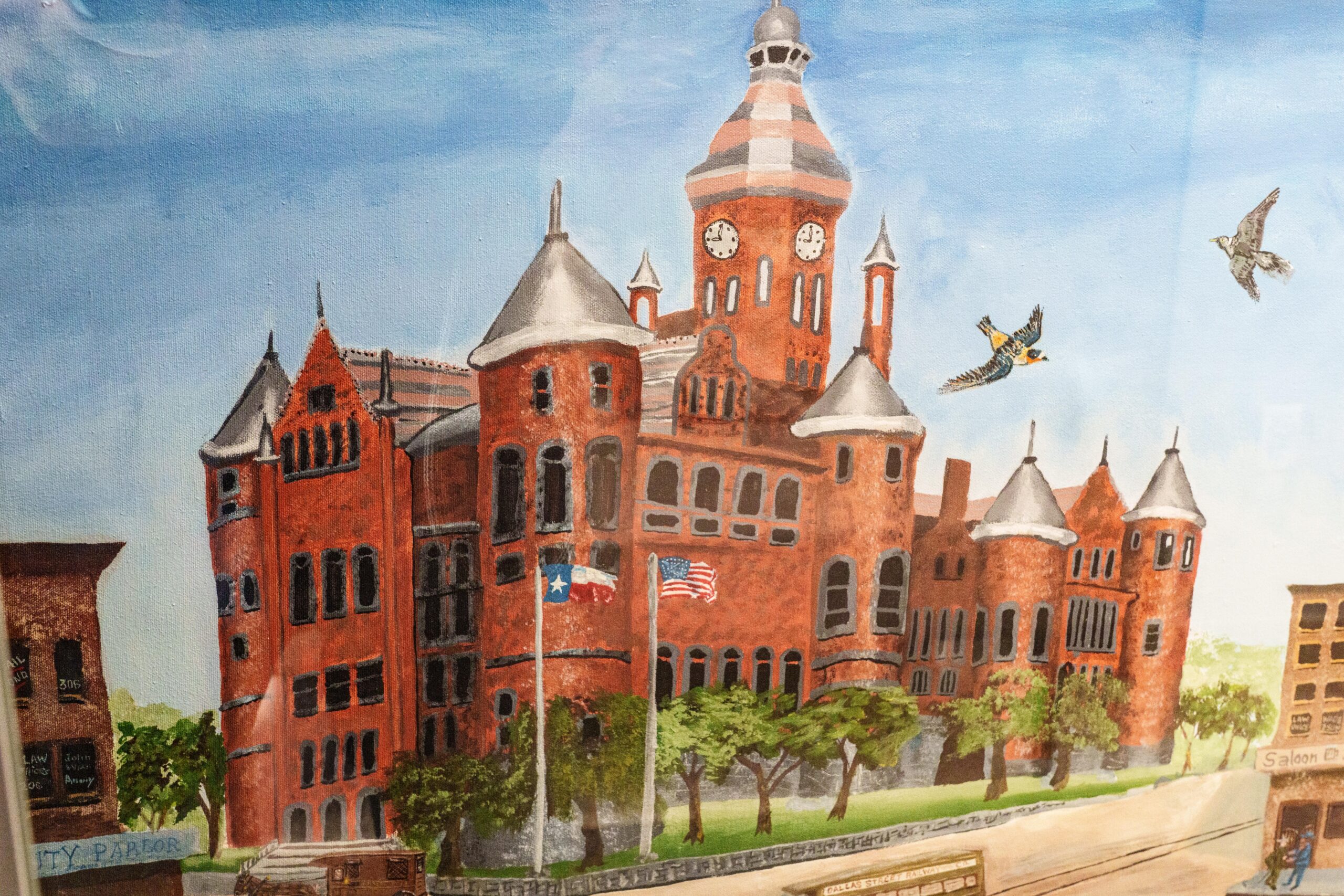
“Legacy Dallas represents the next chapter in the work that began at the Old Red Museum,” said David Biegler, Chairman of the Board, Old Red Courthouse, Inc. “This presentation is the natural evolution of that mission – expanding it beyond a single building into a broader storytelling ecosystem that lives both downtown and online. It allows us to preserve our evolving history while reaching more people, more classrooms and more communities than ever before.”
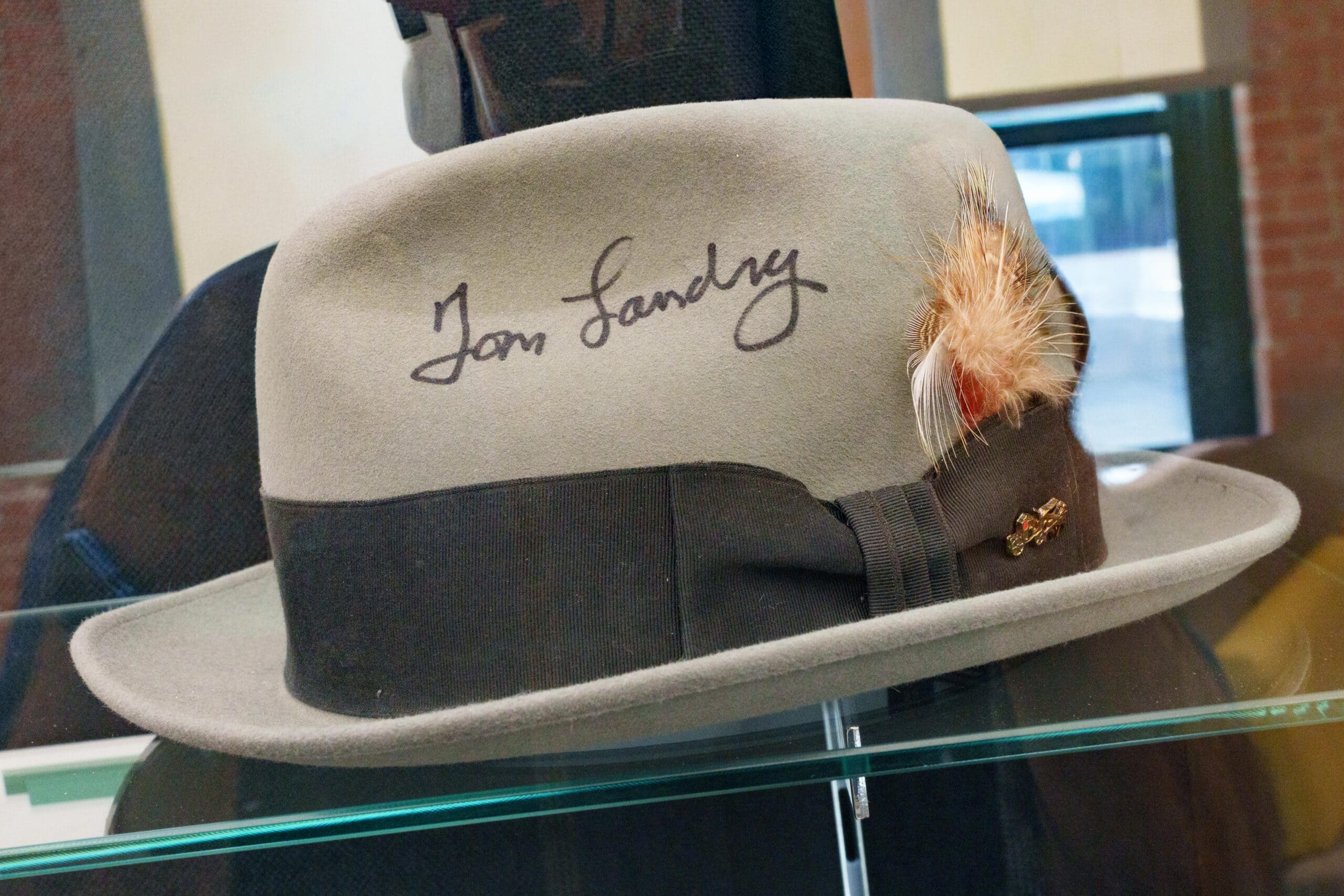
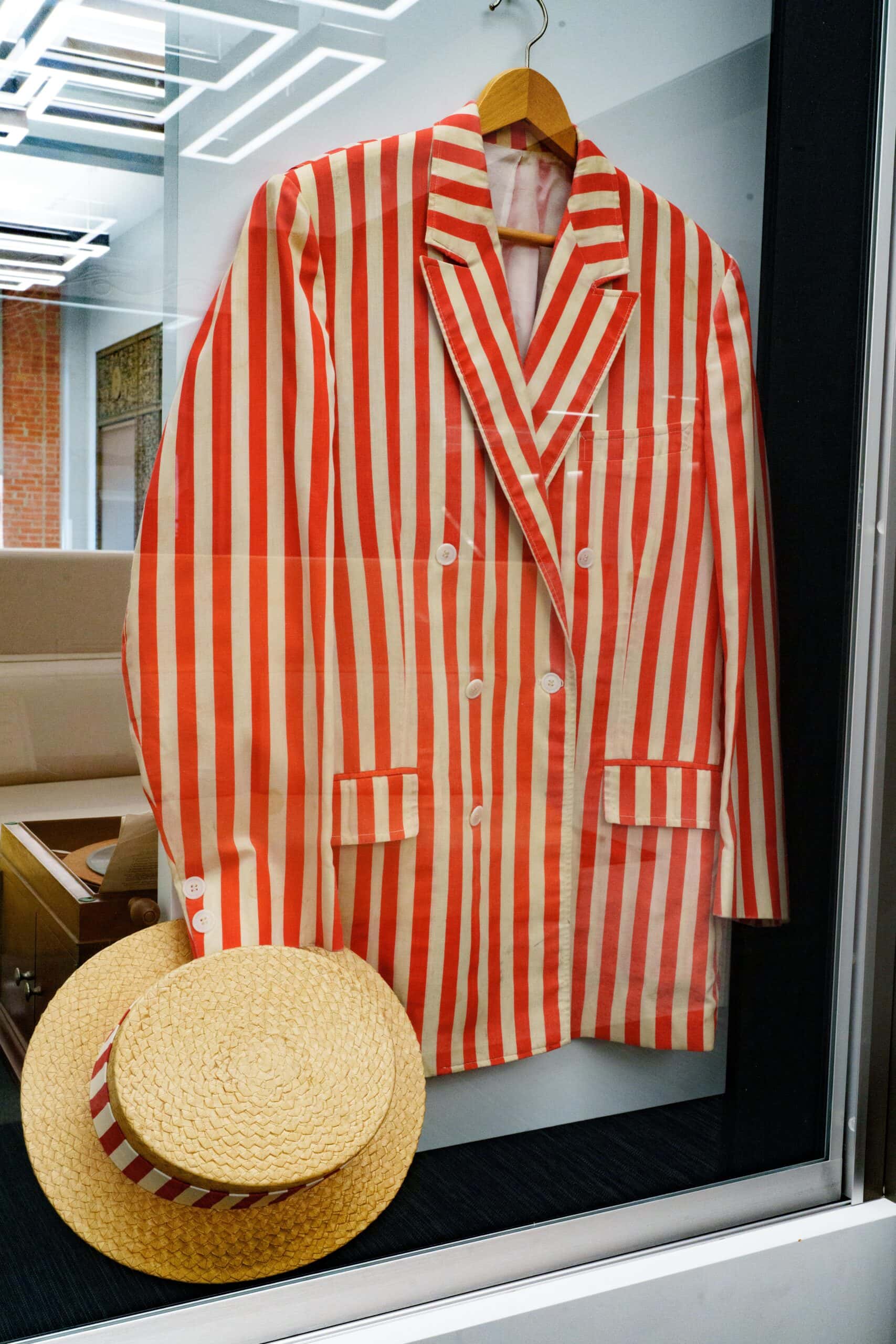
Throughout the exhibit, familiar cultural touchstones are woven alongside earlier artifacts that illuminate everyday life and civic growth in Dallas County. Highlights span 19th-century surveying tools, early political ephemera alongside iconic objects such as TV villain J.R. Ewing’s cowboy hat, Dallas Cowboys coach Tom Landry’s fedora, and the jacket worn by beloved children’s show host Mr. Peppermint. Additional artifacts include a 1920s Neiman Marcus flapper-style wedding gown, a Pullman porter’s cap, a World War I field telephone and a savings box from the Penny Savings Bank of Dallas, a Black-owned financial institution founded in 1917.
Four additional cases cover the fight for equality, showcase boosters and innovators of Dallas, and feature a timeline of Dallas County’s history. A guest exhibition case will initially feature items from the Old City Park Conservancy, with opportunities for future exhibits to be presented by local organizations.
Dallas County Diversity
“Legacy Dallas honors the extraordinary diversity, creativity and resilience of the people and movements who helped shape Dallas County,” said Dr. Evelyn Montgomery, Executive Director, Legacy Dallas. “Our goal is to inspire meaningful connections between past and present by sharing the stories behind how Dallas County came to be. This presentation goes beyond artifacts – it brings our county’s legacy to life, making our shared past accessible to everyone, whether visiting downtown or exploring online from anywhere in the world.”
While the in-person exhibit offers a visual overview of each era, the digital experience at LegacyDallas.org expands the story through deeper exploration, allowing visitors to engage with Dallas County’s history beyond the gallery walls. Content across both platforms is organized into five periods that chart Dallas County’s journey from early river settlements to its role as a global center of innovation and culture: The Early Years (prehistory-1873) explore prehistoric life and Native American settlements shaped by the Trinity River. The Trading Center (1873-1918) period highlights the arrival of railroads, early Main Street commerce and the individuals who helped establish Dallas as a regional crossroads.
20th Century Big D Era
The Big “D” Era (1919-1945) reflects early 20th-century ambition – from industrial growth and beautification efforts such as Turtle Creek Boulevard to cultural milestones that brought national attention to Dallas. In World Crossroads (1945-2000), visitors encounter postwar innovation and entrepreneurship, including advances in technology and the rise of influential homegrown brands. The final period – The New Millennium (2000 to today) – focuses on Dallas County in the 21st century, examining how globalization, innovation, culture and community continue to influence life today.
“Legacy Dallas reflects Dallas County’s long-standing commitment to preserving and sharing its history,” said Dr. Elba Garcia, Dallas County Commissioner for District 4 and Facilities Management Committee chair. “By bringing this permanent exhibit to the Dallas County Records Building and providing digital access to its stories online, we are creating a lasting educational resource that supports students, families and lifelong learners across our community.”
Educational Resource
Legacy Dallas will serve as a valuable educational resource for teachers and students. Through classroom-ready digital content, the online tool offers engaging ways to connect academic curriculum with the stories and experiences of Dallas County. The resource is designed to support public, private and home-schooled students, as well as lifelong learners.
Educators will have access to enrichment activities, digitized primary source materials and thematic lesson supplements designed to help students analyze artifacts, understand context and explore local heritage. Materials will be available through LegacyDallas.org and can be used independently or alongside classroom teaching.
The Legacy Dallas exhibit is located on the main entrance level of the Dallas County Records Building, located across from the Sixth Floor Museum near Dealey Plaza in downtown Dallas’ historic West End District. Admission is free with paid underground parking available. Hours are 8:30 a.m.-4:30 p.m. Monday-Friday (closed holidays). For details and to explore, visit LegacyDallas.org.