


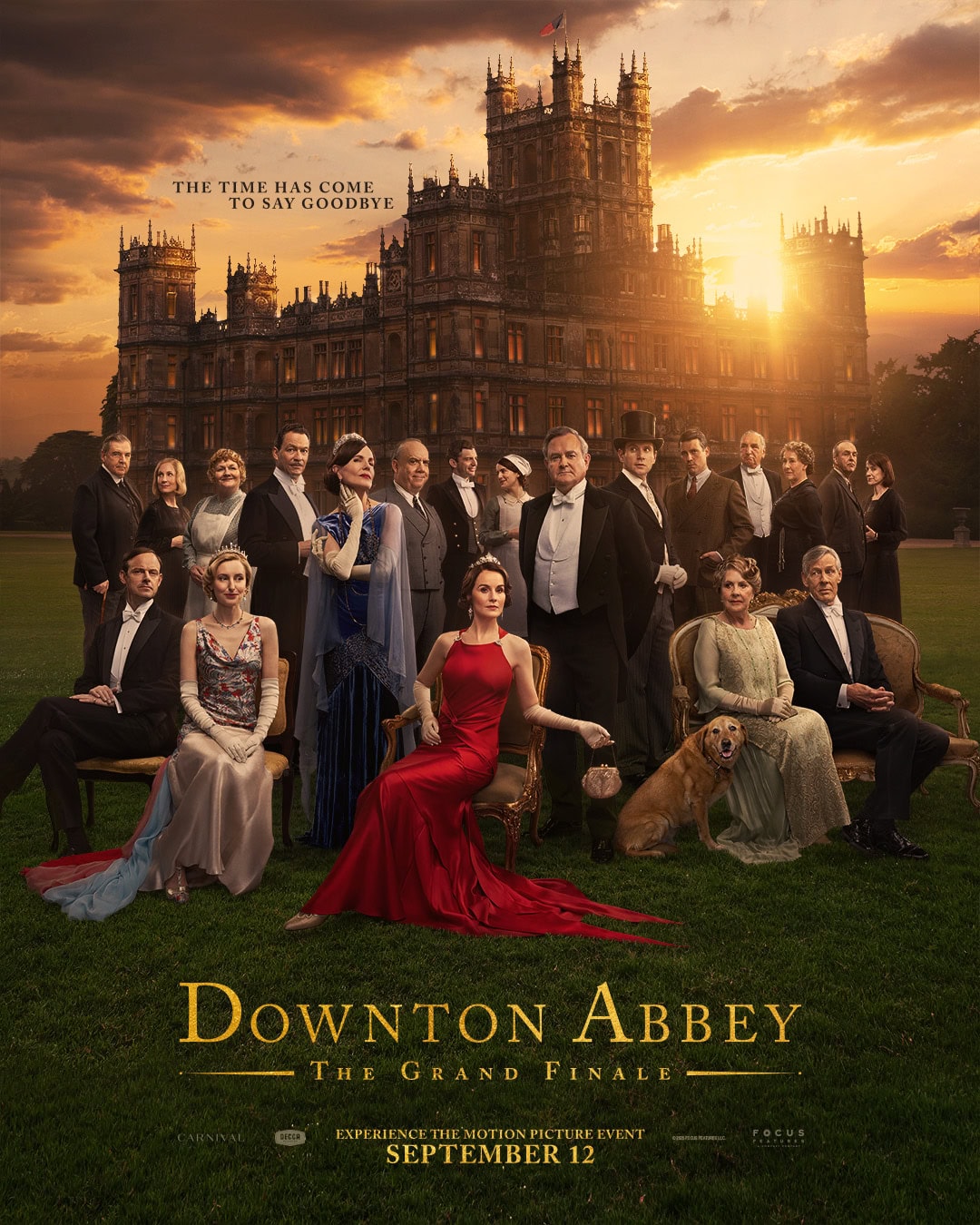
Downton Abbey: The Grand Finale brings an almost perfect ending to creator Julian Fellowes’ long-running TV and film portrayal of an aristocratic British family in the early 20th century. Devoted fans (including this one) stayed enthralled for 16 years of viewing the PBS TV series and the three films that followed. Through Fellowes’ absorbing storytelling, we avidly followed the lives of the “upstairs” Crawley family and their “downstairs” household staff, for three decades–from the early 1900s to the 1930s.
The Grand Finale brings satisfying closure to many of the Downton Abbey characters, making it easier for diehard fans to bid them farewell. The 1930s bring numerous challenges and inevitable changes to the Crawley household. Everyone at Downton Abbey is affected by the scandal of Lady Mary Crawley’s (Michelle Dockery) recent divorce, and by the family’s financial losses.
Changes and Challenges in The Grand Finale
Lord Grantham/Robert Crawley (Hugh Bonneville) somewhat reluctantly prepares to hand estate management and keys to Downton Abbey over to Mary, as he and Lady Cora (Elizabeth McGovern) move into the Dowager’s Cottage vacated after Lady Violet’s (Dame Maggie Smith) death. Recently retired Butler Mr. Carson (Jim Carter) keeps hanging around, although he trained young Andy Parker (Michael Fox) to take his place as Butler. Upstairs or Downstairs, letting go is hard to do!
Lady Mary hopes to continue renovating the estate with anticipated funds coming with Uncle Harold, Lady Cora’s American brother (Paul Giamatti). Harold’s arrival brings more bad news, though. He’s lost both his and Cora’s inheritance, and needs money to pay back Guy Samson (Alessandro Nivolo) his financial adviser. The dashing Samson, who accompanied Harold on the trip, wastes no time trying to seduce Mary. He senses that she’s easy prey since she’s suffering being shunned by London’s “polite society.”
Anna Bates (Joann Froggatt), Mary’s maid and longtime confidant, and her sister Lady Edith (Laura Carmichael), are the first to discover what happened. In one of my favorite scenes in the film, Lady Edith boldly confronts Mary’s seducer to ensure this newest Crawley family scandal never becomes public.
Downton Abbey Women Embrace Change
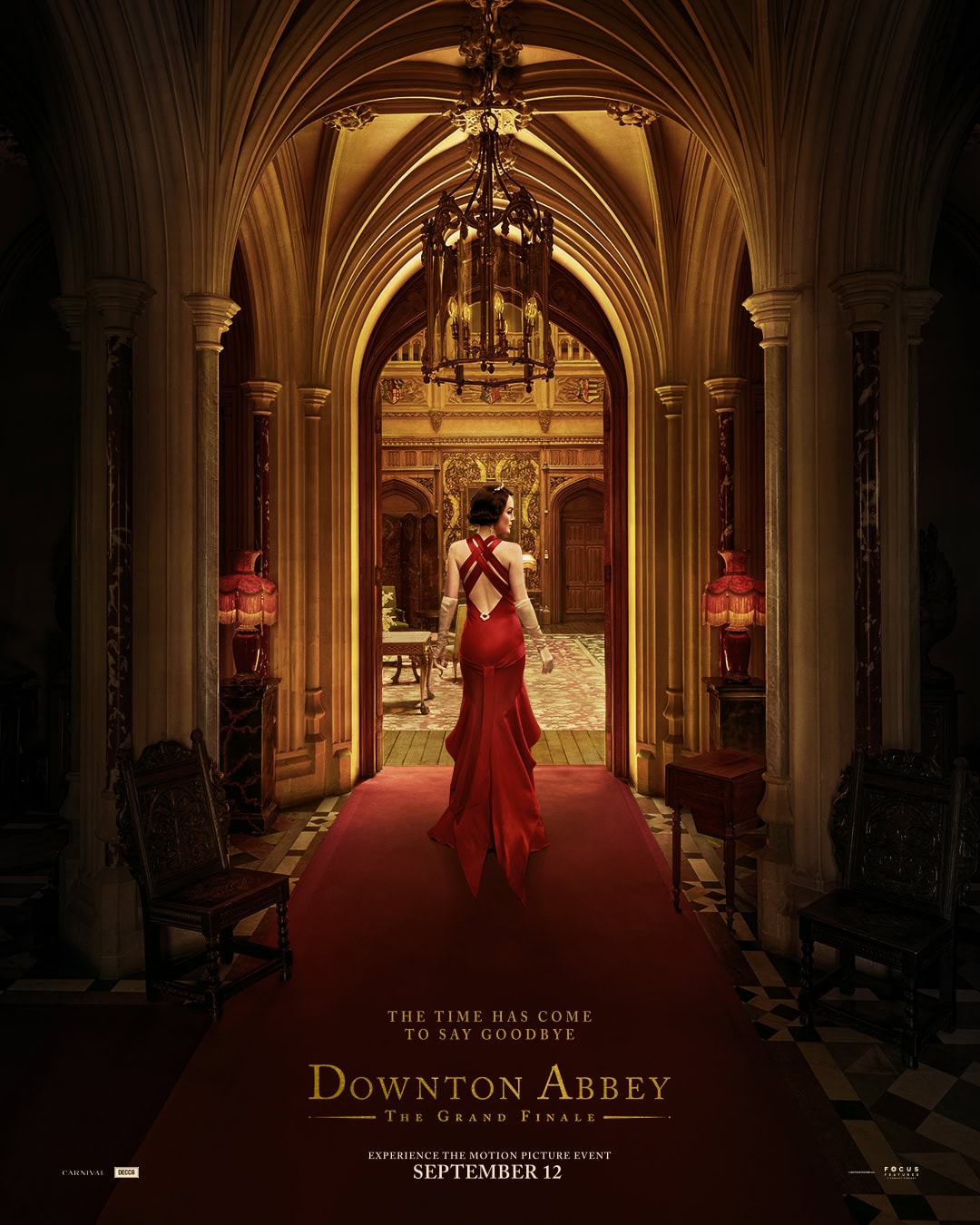
It’s been gratifying to watch the women discover their worth and fight for their own happy endings. Lady Mary and Lady Edith transition from squabbling siblings to loyal family members, true to the heritage of their late grandmother. Other women, including Isobel Merton (Penelope Wilton), Daisy (Sophie McShera), Mrs. Hughes-Carson (Phyllis Logan), Mrs. Baxter-Moseley (Rachel Cassidy); and Mrs. Patmore (Lesley Nicol) conquer their own challenges in this new era.
Along with all the perennial fan favorites, The Grand Finale introduces an influential celebrity (Noel Coward played by Arty Froushan). Coward is persuaded to help restore the Crawley family’s place in society. He not only attends their ball—ensuring its success—he even performs one of his songs. His entourage includes Hollywood star Rex Dexter (Dominic West) with his companion/dresser Barrow (Robert James Collier), once a servant at Downton Abbey.
Along with Fellowes’ outstanding script, which ties so many storylines up with a bow, the fabulous cinematography by Ben Smithard and costumes by Anna Robbins make this film one to watch and savor again and again. The large cast is directed by Simon Curtis, who directed A New Era, the previous Downton Abbey film.
Downton Abbey: The Grand Finale
The highly anticipated film opened wide and in Dallas area theaters, including the Angelika Film Center and Alamo Drafthouse, Sept. 12. It will eventually stream on Peacock, Amazon Prime, and other platforms, but don’t miss the chance to see this lovely film on the biggest screen you can find.
Downton Abbey: The Grand Finale is written by Julian Fellowes, and directed by Simon Curtis. The drama is distributed by Focus Features, from Production Company Carnival Films. It’s rated PG for smoking/suggestive material/some thematic elements; and is two hours and three minutes long.